It’s uphill to the kingdom
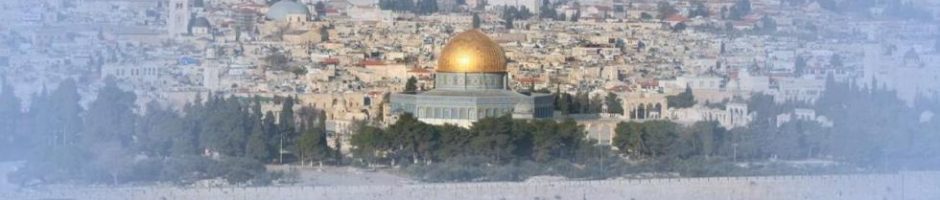
When I finish guiding a group in Israel, normally my habit is to spend a bit of time looking around on my own. My June trip this summer was no exception. After seeing the group off at the airport, I returned to Jerusalem and wandered down to one of the city’s most historic parts, The City of David, original Jerusalem. An appropriate spot to do some looking around, for at the foot of this hill, at its lowest level, are the Herodian banks of the Pool of Siloam. This is the place, according to John 9, where a man without vision was once sent by Jesus to wash his eyes and be healed of his blindness. I tried to imagine what first sight looked like for a man blind from birth. And then it happened to me. Sort of. In a very familiar place to me, my eyes opened. And I saw something new.
Excavations near the Pool of Siloam have recently revealed an underground sewer system from second temple times where waters flushed from the temple mount once coursed down through the Tyropoean valley to the confluence of Jerusalem’s wadis. What makes the discovery especially significant is that this tunnel was constructed for more than just drainage. It was intended to serve as an emergency escape route from the temple fortress above in case of a perilous situation on the platform. Such an emergency did in fact arise in the year, AD 70, when Rome moved to put an end to the Jewish revolt that had dragged on into its fourth year. Invited by workers to enter this underground system and move upward along its course to the mount above, I thought of the role this tunnel had played in the fall of Jerusalem and imagined the events occurring around me had I been there on those fateful days in August so long ago.
In the summer of AD 70, Roman general Flavius Titus launched a devastating assault with four legions against Jerusalem and its temple. For months, Jewish Zealots fought bravely, managing to fend off every attack thrown at them. But finally, hopelessly outnumbered, the situation grew impossible for the defenders, and on August 28 (the 9th of Av), battering rams broke into the inner wall of the temple. Roman forces poured through the breach onto the esplanade burning and looting at will. The defeated Zealots broke ranks and, with no other course left to them, fled into the emergency tunnel in a desperate attempt to escape. The attacking legionaries pursued them mercilessly and for nearly two days rooted out the fugitives from their hiding places in the sewers below. As attested by archaeology, the carnage that ensued was unimaginable.
While walking the uphill course of that tunnel, I was haunted by thoughts of those terrible days. Though dazed by their reality, however, I sensed strangely that I might be, in a way, reversing history. And I was not doing it alone. Others climbed with me. Those Jews of old were there, returning to the kingdom they had built, if ever so briefly, with their ideals and resolve. And on a climb that increasingly took on metaphorical proportions, others were there as well, climbing to the Kingdom of God above.
I thought of the group that I had just finished guiding through Israel. Most of the members were East Europeans and Eurasians serving God in the former Soviet states. For sure, theirs is an uphill climb. Enemies abound. Attrition is high. The odds are against them. Still faithfully they trudge on, day after day, year after year, believing that work for the Kingdom must survive. I thought of others in the West walking with them on this journey. And I rejoiced in a cherished ministry that God has given me to climb in the company of dedicated servants like these.
After some time underground I emerged exhilarated on the Herodian street above. I knew what I had to do then. I found my way through tears to the so-called “Wailing Wall” a short distance away to pray for fellow-climbers on our journey. Perhaps you are one for whom I prayed. If so, may God uphold you as you climb, strengthen your gait, and quicken your step. Be encouraged. You are not alone. It is indeed uphill to the Kingdom. But the company is good. And the course is certain.
A Christmas surprise
August language
For the past twenty-five years, August for me has been a language month. Let me explain. At the seminary in which I teach, the biblical languages are offered in intensive format for those desiring to delve into the deeper dimensions of the Bible. For four weeks every August for the past quarter century, I have taught eager learners to read the classical Hebrew language of the Bible.
Classical Hebrew was not exactly the language of King David or the vernacular used by the prophets to promulgate their oracles. The street language of the people of Israel, called Canaanite after the various populations who preceded her along the shores of the eastern Mediterranean, was a bit different. Classical Hebrew was a special literary form of the street language. It was developed by the scribal caste in ancient Israel to produce the official documents of the nation. What Jews call the Hebrew Bible and Christians call the Old Testament was authored and edited in this developed literary language. Most of the Hebrew Bible or Old Testament looks exactly the same linguistically speaking, even though it was obviously produced over a period of many centuries. Language uniformity exists because all of the books of the Bible were converted to a common dialect that has come to be called Biblical Hebrew. This is what I teach and have taught, all told now, for nearly forty years.
My first experience with Hebrew was in Israel in the early 1970s. As a young man fascinated by the exotic world of the middle east, I studied Hebrew in an intensive/everyday experience in classrooms in Jerusalem and on a Galilee kibbutz. The language I learned then is the main language of the modern state of Israel. Called Modern Hebrew, it has been in the process of development only since the late 19th century. It is founded, however, upon the classical language of the Bible. So while Modern Hebrew is not exactly the same as Biblical Hebrew, gaining oral and aural facility in Modern Hebrew gives one a leg up on mastering the language of the Bible. When I studied Biblical Hebrew a few years later, I found it easy and fun because I’d already learned to speak and write its modern counterpart. It is a bit like reading the King James Version of the Bible from a linguistic platform of 21st century English. Not exactly the same language, but “you can get there from here.”
A selling point for my August language class is that we don’t just do language. We also introduce students to the culture of the people who used the language for communication. Every day I bring to class an item that illustrates something from the biblical, medieval, or modern experience of the Jewish people. Items like a 6th century BCE Babylonian arrowhead found near the northern wall of Jerusalem, a Herodian period oil lamp that would have brought light to a home in Bethlehem at the time of Jesus, or one of the various symbols used by Jews from rabbinic times to the present to capture the dynamic of commitment to God and His Torah. I expect to discuss some of these items in upcoming blogs. I think you’ll enjoy these presentations, so check back, right?
As you can tell, my Augusts are about language. I hope you didn’t mind my sidestepping my usual topics in this blog to talk about Hebrew, which for years now has been and I expect forever will be an important part of my life. Want to know more? Come join us in Nyack, New York! Always glad to include you in my August Language.
 BibleSettings Ministries
Recent blog comments